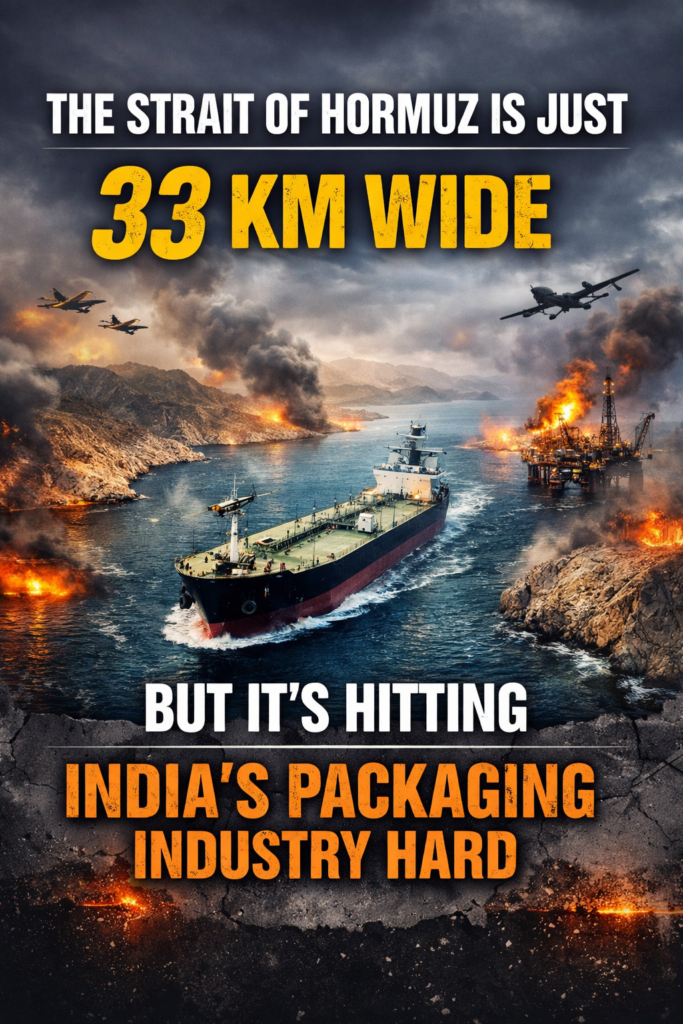
The Strait of Hormuz is only 33 km wide.
Yet today, it is one of the most critical pressure points for global trade — and the ongoing war tensions in the Gulf region are sending shockwaves across industries worldwide.
For India’s corrugation and packaging sector, the impact is immediate and measurable.
This is not just geopolitics.
This is cost escalation, supply uncertainty, and margin pressure.
Why This War Is a Direct Threat to Supply Chains
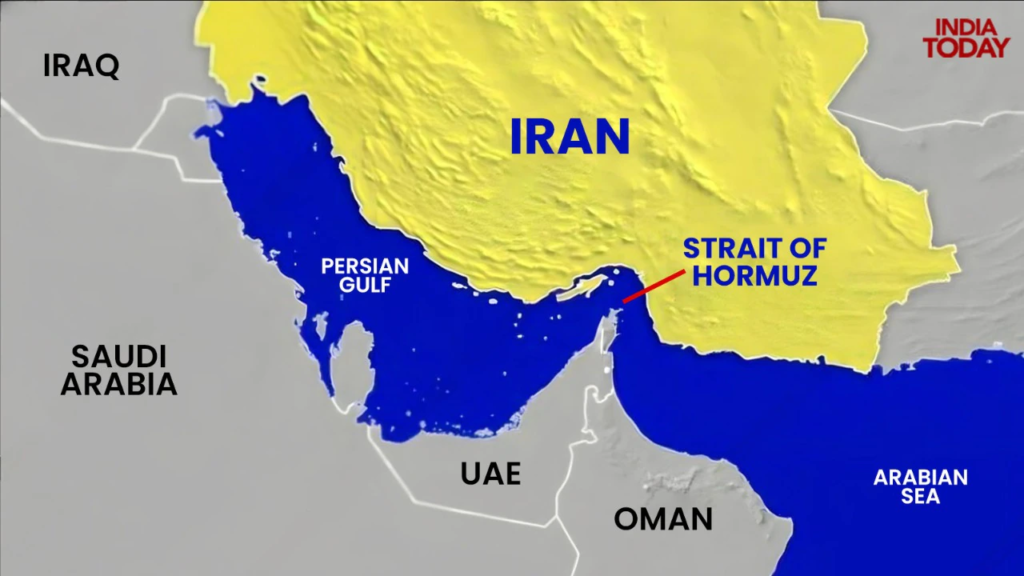
The Strait of Hormuz connects the Persian Gulf to global shipping routes. Nearly:
- 20% of the world’s oil supply
- Around 20% of global LNG shipments
- About one-third of global urea trade
move through this narrow corridor.
When conflict escalates, shipping through this route becomes risky, restricted, or delayed. Insurance premiums rise. War-risk surcharges are added. Some vessels reroute entirely.
Several ships are now diverting around the Cape of Good Hope — adding 15–20 days to transit time.
That means:
- Higher freight cost
- Working capital stuck at sea
- Delivery uncertainty
- Increased landed cost

Why India Feels the Impact Faster
India imports nearly 88% of its crude oil requirement.
When war disrupts oil movement:
- Fuel prices rise
- Power generation cost increases
- Coal prices spike
- Transportation becomes expensive
- Currency volatility affects imports
For paper mills and corrugation plants, energy and logistics are core cost components — not optional overheads.
Even small fluctuations can shift profitability significantly.
Direct Impact on Corrugation & Paper Mills
1️⃣ Coal & Energy Cost Surge
Paper manufacturing is energy-intensive. Rising coal and fuel prices immediately increase reel production cost. Mills are forced to revise prices or operate under margin stress.
2️⃣ Imported Waste Paper & Chemical Delays
War-zone shipping risks have disrupted:
- Imported waste paper movement
- Chemical supply chains
- Specialty additives availability
Longer transit cycles disturb production planning for mills and downstream box manufacturers.
3️⃣ Freight & War Risk Premiums
Shipping companies are adding:
- Conflict surcharges
- War-risk insurance charges
- Container repositioning costs
Freight is no longer stable — it is volatile and reactive to war developments.
What This Means for Box Manufacturers
For corrugation plants and allied industries, the war translates into:
- Sudden kraft paper price revisions
- “Subject to confirmation” booking policies
- Irregular supply schedules
- Margin compression on fixed contracts
- Increased working capital requirement
Industries like FMCG packaging, agri-exports, electronics packaging, and industrial cartons are already experiencing pressure.
Geopolitical war is no longer background noise.
It is now a pricing variable.
The Strategic Shift Required
In a war-driven supply environment, reactive buying can be dangerous.
Smart corrugation businesses are:
- Diversifying supplier sources
- Building buffer inventory for critical GSM grades
- Locking freight wherever possible
- Revising pricing clauses with end customers
- Closely monitoring currency movement
- Strengthening partnerships with reliable paper suppliers
Risk management is now part of procurement strategy.
The Larger Reality
The Strait of Hormuz may be 33 km wide.
But its disruption affects:
- Kraft paper pricing
- Liner board supply
- Fluting availability
- Coal markets
- Freight economics
- Packaging margins
War today does not remain at borders.
It moves through supply chains.
Our View at Go Bio Services
At Go Bio Services, we are closely tracking:
- Global paper and pulp trends
- Freight and shipment movements
- Energy and coal price fluctuations
- Import timelines
Our focus remains on transparency, proactive communication, and supporting our channel partners through volatility.
If you are in corrugation, packaging, or import-export, this is not distant international news.
It directly impacts your cost sheet.
And preparation will determine who protects margins — and who absorbs losses.